
Yes — perfume can be shipped by air, and most international fragrance shipments move this way. But it isn’t treated like an ordinary parcel. Because finished perfume typically contains alcohol or another flammable solvent, air carriers and regulators classify it as dangerous goods, which changes how it has to be packaged, labelled, documented and — in some cases — which aircraft it’s allowed on. This guide answers the direct question brands and sellers actually search for, then walks through the practical detail that determines whether a specific shipment is straightforward or gets held up at the airport.
The Short Answer
Perfume can be shipped by air as dangerous goods, most commonly under UN 1266 (Perfumery Products), Class 3 flammable liquid. Whether a given shipment needs full dangerous goods documentation or qualifies for a lighter-touch process depends on the product’s packing group and the quantity per package — not on the fact that it’s “just perfume.” For the full classification and compliance checklist, see our IATA dangerous goods compliance checklist for perfume. This article focuses specifically on the air-freight question: what’s actually allowed on a plane, and why.
Why Perfume Is Restricted on Aircraft
The restriction isn’t really about perfume as a product category — it’s about flash point. Most fine fragrance and eau de parfum/eau de toilette formulations are 60-95% denatured alcohol by volume, which gives them a low flash point and makes them flammable under transport regulations. Aircraft cabins and cargo holds are a controlled environment where a flammable liquid leak is a genuine safety risk, so the IATA Dangerous Goods Regulations set out exactly how much can be carried, how it must be packaged, and what documentation has to travel with it. Two products marketed identically as “perfume” can carry different alcohol concentrations and therefore different classifications, so the specific product’s Safety Data Sheet — not its category — is what determines the rules that apply.
Passenger Aircraft vs Cargo-Only Aircraft
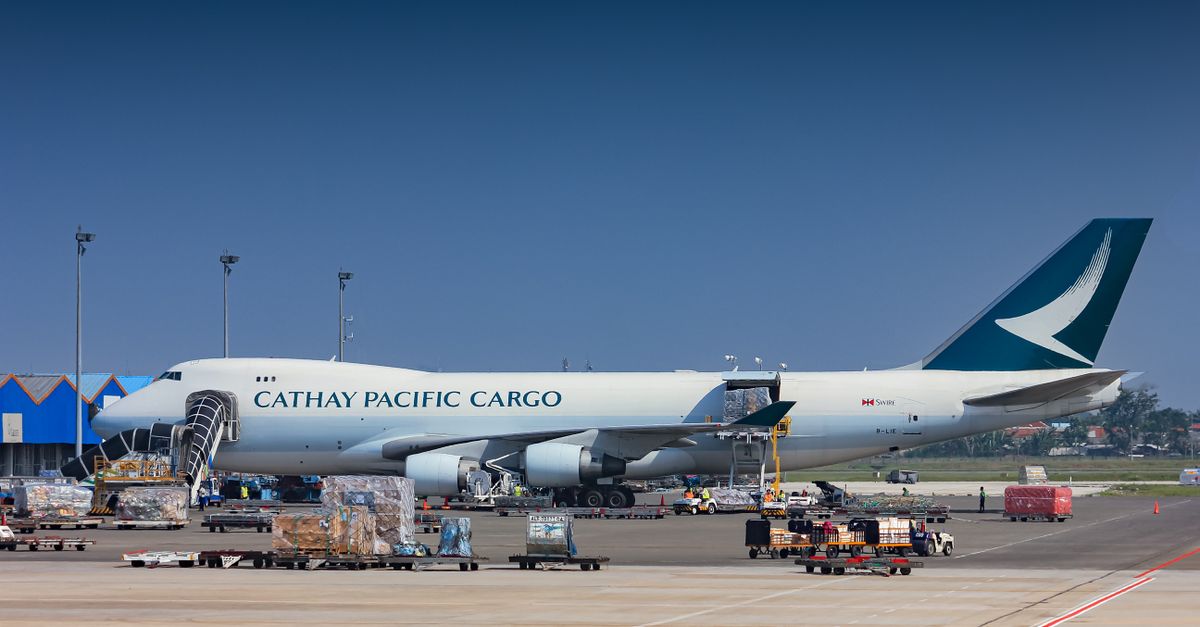
This is the distinction that causes the most confusion, and it’s the one general “is perfume dangerous goods” guides often skip. Under the IATA regulations, dangerous goods carried as Limited Quantity are subject to different maximum quantities depending on whether the shipment travels on a passenger aircraft or a cargo-only (freighter) aircraft — cargo aircraft generally permit larger quantities per package than passenger aircraft. In practice, this means:
- Small parcels and typical ecommerce-volume perfume shipments can usually move on standard passenger-aircraft-compatible air services, provided packaging, quantity and labelling requirements are met
- Larger volumes, bulk or wholesale shipments are more likely to need a cargo-only aircraft routing, which affects which carriers and services can be used and can affect transit time
- Some couriers explicitly separate their “dangerous goods” air service from their standard air service, with different pricing, packaging requirements and transit options
Your freight forwarder, courier or fulfilment partner should confirm upfront which routing a given shipment needs — this shouldn’t be left to guesswork or discovered at the point of collection.
Air Freight vs Courier Air Services
“Shipping perfume by air” can mean two fairly different things in practice. Small and mid-volume ecommerce orders typically move through a courier’s air network — DHL, FedEx, UPS or a similar carrier’s dangerous-goods-compliant air service, booked per parcel or per day’s dispatch. Larger, palletised or wholesale volumes are more often booked as dedicated air freight through a forwarder, which involves its own airway bill, consolidation and airport handling process rather than a courier collection. Both routes are regulated the same way under IATA rules — the difference is scale, booking process and, often, cost per unit. We’ve compared the major couriers’ perfume-shipping policies in detail in which couriers ship perfume internationally, and covered the bulk/freight side in our wholesale perfume shipping guide.
What Has to Be in Place Before a Shipment Can Fly
Regardless of which route a shipment takes, air carriers will generally expect the following before they’ll accept a dangerous goods perfume shipment:
- Confirmed UN number and packing group for the specific product, taken from its Safety Data Sheet
- Compliant inner and outer packaging, including leak containment where required for the packing group
- Correct Class 3 hazard labelling and package marking — not more or less than what’s actually required
- A dangerous goods declaration, where the shipment doesn’t qualify for reduced Limited Quantity documentation
- An accurate customs description and commodity code — “cosmetics” or “gift” is not sufficient for a dangerous goods air shipment
This is deliberately a summary rather than a full walkthrough — our IATA compliance checklist covers each of these steps, and the packing group implications, in full.
Common Reasons Air Shipments Get Rejected or Delayed
Most delays we see aren’t caused by perfume being fundamentally unshippable by air — they’re caused by paperwork or packaging mismatches with the specific routing booked. The most frequent causes are: booking a standard (non-dangerous-goods) air service for a product that needs dangerous goods handling; using packaging or labelling that doesn’t match the declared packing group; vague or generic customs descriptions that get flagged at screening; and quantities per package that exceed what’s permitted for the aircraft type on that route. Each of these is avoidable with the right process in place before the shipment is booked, rather than caught at collection or, worse, at the airport.
How Ship Perfume Handles Air Shipments
As a UK-based, DG-trained fragrance 3PL, this is the kind of detail we build into fulfilment as standard rather than leaving to chance on individual bookings. We classify products correctly, package and label to the right standard, prepare documentation where it’s required, and route shipments to whichever carrier and service — passenger-compatible or cargo-only — actually fits the order, whether that’s a single ecommerce parcel or a wholesale pallet. Customers can be anywhere in the world — the US, the EU, or further afield — while everything ships from our UK facility. See our services page for the full picture, or our fragrance 3PL and fulfilment guide for how air shipping compliance fits alongside warehousing, pick-and-pack and dispatch.
Frequently Asked Questions
Can perfume be shipped by air internationally?
Yes. Perfume is regularly shipped internationally by air as dangerous goods, typically under UN 1266, Class 3 flammable liquid. It requires correct classification, packaging, labelling and — depending on the packing group and quantity — a dangerous goods declaration.
Can you send perfume on a passenger aircraft, or does it need a cargo plane?
Both are possible. Passenger aircraft can carry perfume as Limited Quantity dangerous goods up to lower per-package thresholds than cargo-only aircraft, which is generally sufficient for typical ecommerce parcel volumes. Larger or bulk shipments are more likely to require a cargo-only aircraft routing.
Do all couriers offer air shipping for perfume?
Most major international couriers can carry perfume by air, but not all offer it on every service tier, and requirements vary by carrier and route. See our courier comparison guide for a breakdown of the major carriers.
Is air the only option, or can perfume go by road or sea instead?
No — perfume can also be shipped by road (under ADR rules) or sea (under IMDG rules), and these are often used for bulk or less time-sensitive shipments. We cover this in our guide to international dangerous goods shipping by road and sea.
Why was my perfume shipment rejected by an airline or courier?
Most rejections come down to a mismatch between the service booked and the product’s actual classification — for example, booking a standard parcel service for a shipment that needs dangerous goods handling, or missing/incorrect documentation. Confirming classification and booking the correct service upfront avoids this in almost all cases.
Shipping perfume by air and want the classification, packaging and carrier routing handled for you? Get in touch to talk through your product range and order volumes.