
Shipping perfume internationally from the UK is not the same as posting a normal parcel. Most fine fragrance, eau de toilette and cologne contains enough alcohol to be classed as a Class 3 flammable liquid under UN number UN1266, which means classification, packaging, documentation and carrier approval all have to be right before the parcel ever leaves the warehouse.
This guide walks through exactly how to ship perfume internationally from the UK: how it’s classified, how to package a single bottle correctly, which documents you need, how carrier and destination rules differ, what it costs, and the most common mistakes that get shipments delayed or refused. It’s written for UK-based brands, ecommerce sellers and individuals sending fragrance abroad – whether that’s one bottle or a few hundred a month.
When Can Perfume Be Shipped Internationally From the UK?
Perfume can be shipped internationally from the UK once three things are confirmed: how the product is classified for transport, whether your chosen carrier accepts that classification on the route you need, and what the destination country requires on arrival.
Most eau de parfum and eau de toilette is roughly 70-90% ethanol by volume, with a flash point well under 23°C – comfortably inside the range that makes it a dangerous good for transport purposes, regardless of how it’s marketed or labelled on the shelf. Solid perfume, perfume oils and some alcohol-free formats can fall outside Class 3, but that has to be confirmed from the product’s actual formulation and Safety Data Sheet, not assumed from the word “perfume” on the box.
Why Is Perfume Regulated During International Shipping?
Perfume is regulated because the solvent, not the scent, is what transport rules care about. An alcohol-based fragrance is flammable, and flammable liquids carry a real fire risk in a cargo hold, a sorting depot or the back of a delivery van if a bottle breaks.
What Does Class 3 Flammable Liquid Mean?
Class 3 is the dangerous goods class for flammable liquids with a flash point of 60°C or below. Most finished perfume falls into Packing Group II or III depending on its exact alcohol content and flash point, which in turn determines how much can be shipped under the Limited Quantity or Excepted Quantity provisions that most parcel-sized fragrance shipments rely on.
What Does UN 1266 Mean for Perfume?
UN 1266 is the specific four-digit dangerous goods number assigned to “Perfumery Products” containing flammable solvents. It’s what appears on the dangerous goods declaration and packaging markings when one is required. It should come from the product’s actual Safety Data Sheet and flash point data, never assumed purely because something is labelled “perfume” or “cologne.”
Is Shipping Cologne or Aftershave Any Different?
No – cologne, eau de toilette and aftershave are classified the same way as perfume under UN1266 when they share a similar alcohol content and flash point. The packaging and documentation steps below apply equally. If cologne specifically is what you’re shipping, our dedicated guide to shipping cologne covers the aftershave and cologne packaging quirks (taller, narrower bottles; screw caps vs atomisers) in more depth.
How to Ship a Perfume Bottle: Step by Step
For a single bottle or a small personal shipment, the process comes down to six steps:
1. Check the Classification
Confirm the product’s alcohol content and flash point from its Safety Data Sheet. This decides whether it ships as a fully regulated dangerous good, under a Limited Quantity exemption, or – for alcohol-free formats – as a non-dangerous parcel.
2. Choose a Carrier That Accepts It
Not every courier accepts perfume on every route. See our comparison of which couriers ship perfume internationally for how DHL, FedEx, UPS and Royal Mail each handle fragrance shipments.
3. Package the Bottle Correctly
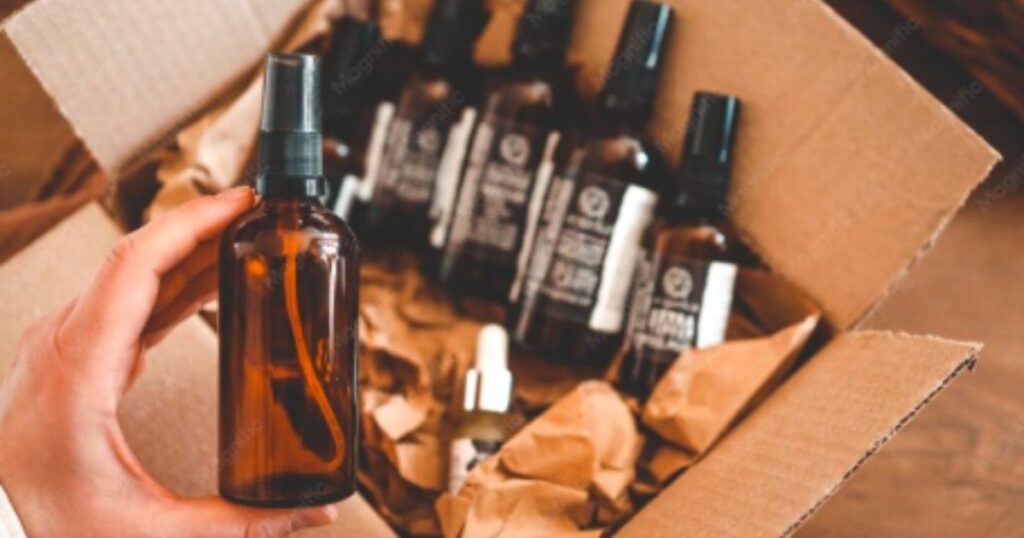
Use leak-proof inner packaging, absorbent material and enough cushioning that the bottle can’t move or strike another bottle in transit. Our step-by-step packaging guide covers materials and technique in full.
4. Apply the Right Labels
If the shipment needs a Limited Quantity mark or Class 3 diamond, apply only the labels that are actually required – an unnecessary hazard label can cause as many problems as a missing one.
5. Prepare the Paperwork
Have the Safety Data Sheet, a clear commercial invoice (never a vague description like “beauty products”) and, for air shipments, any required dangerous goods declaration ready before you book. Our IATA dangerous goods compliance checklist walks through exactly what air shipments need.
6. Book and Declare the Shipment Accurately
Always declare the parcel’s actual contents to the carrier. Booking a fragrance shipment as a standard parcel to save money is the single most common reason perfume gets held, returned or has its account suspended by a carrier.
Quantity Limits and Carrier Acceptance
Limited Quantity and Excepted Quantity provisions set a maximum amount of Class 3 liquid per inner and outer packaging – typically measured in millilitres per bottle and a combined total per parcel. Exceed that threshold and the shipment has to move as a fully regulated dangerous goods consignment, which usually means a different service, extra documentation and a higher price.
Carrier acceptance then layers on top of the regulatory limit: a carrier may technically be allowed to carry a given quantity under IATA, ADR or IMDG rules but still choose not to accept it on standard accounts, or restrict it to specific services or destinations. Always confirm acceptance with the actual carrier before packing, not just the regulatory limit.
Documents Needed to Ship Perfume Internationally
Paperwork requirements depend on the product, quantity, transport mode and destination, but four documents come up on almost every international fragrance shipment:
Safety Data Sheet
Gives the flash point, UN number, dangerous goods class and handling information for the exact product being shipped – not a similar product with a similar name.
Dangerous Goods Declaration
Required for many air shipments above the Excepted Quantity threshold. See the IATA compliance checklist for when this applies and what it needs to contain.
Commercial Invoice
Needs a clear, accurate description of the goods, quantity, value, and country of origin – vague descriptions are a common cause of customs delays.
Commodity (HS) Code
Perfume is classified under HS heading 3303 for customs purposes, which is separate from its UN1266 dangerous goods classification and determines import duty and VAT at the destination. Our perfume HS code and customs duty guide covers this in detail, including the difference between DDP and DAP terms.
Rules by Destination: USA, Canada and Europe
Meeting UK export rules isn’t enough on its own – the shipment also has to satisfy the destination country’s import and customs requirements. Rules, duty rates and carrier acceptance for perfume can differ meaningfully between the USA, Canada and the EU. Our dedicated guide to shipping perfume from the UK to the USA and Canada covers the export documentation, customs value thresholds and carrier options for those routes specifically. For EU destinations, expect standard post-Brexit customs procedures, with Northern Ireland sometimes following different arrangements – always check the exact origin and destination pairing before dispatch.
How Much Does It Cost to Ship Perfume Internationally?
There’s no single price, because cost depends on destination, weight, dimensions, bottle count, classification, packaging and transport mode. Dangerous goods handling and compliant packaging typically add a surcharge on top of a standard parcel rate, and air services carrying Class 3 liquid are usually more expensive than road or sea. Our full price guide to shipping perfume breaks down exactly what drives the cost up or down for both single-bottle senders and brands shipping in volume.
Shipping Perfume Samples or Small Quantities
Small vials and testers carry the same UN1266 classification as full-size bottles – size doesn’t exempt a product from dangerous goods rules, although smaller volumes may qualify more easily for Excepted Quantity provisions. If you’re shipping samples, decants or minis specifically, see our guide to shipping perfume samples for the packaging and carrier-acceptance differences that apply at that scale.
What Happens If You Ship Perfume Internationally Incorrectly?
Incorrectly packed, declared or booked perfume shipments get delayed, refused, returned to sender or held for inspection. Beyond the immediate disruption, carriers can suspend accounts that repeatedly misdeclare dangerous goods, and damaged or leaking bottles in transit create cleanup costs and can affect other parcels in the same consignment.
Common Mistakes When Shipping Perfume Internationally
The most frequent mistake is assuming every perfume carries the same classification – always check the actual Safety Data Sheet rather than defaulting to UN1266 by habit. The second is booking a standard parcel service without telling the carrier the contents are a flammable liquid, which risks the shipment being intercepted and the account being flagged. Poor inner packaging, vague customs descriptions and skipping destination-specific checks round out the list of what most commonly goes wrong.
When Should a Business Use a Specialist Perfume Fulfilment Partner?
Once a brand is shipping more than a handful of orders a week, the classification, packaging and documentation steps above become a repeated operational cost rather than a one-off task. A DG-trained 3PL that specialises in fragrance – with the right storage, compliant packaging and carrier accounts already in place – removes that overhead. See our guide on how to choose a 3PL for your fragrance brand, or go straight to our fulfilment services page to see how Ship Perfume handles classification, compliant packaging and worldwide dispatch from our UK facility for brands shipping anywhere from 20 to 500+ orders a month.
Final Checks Before Sending Perfume Abroad
Shipping perfume internationally correctly comes down to five checks: product classification, suitable packaging, accurate documentation, carrier acceptance, and destination requirements. Get those right and most international fragrance shipments move without issue.
Ship Perfume ships worldwide – to the USA, the EU and beyond – from our dedicated UK facility, handling classification, compliant packaging and documentation for brands and individuals alike. Get a shipping quote to arrange your next shipment.
Frequently Asked Questions
How do I ship perfume internationally from the UK?
Check the product’s classification and Safety Data Sheet, confirm your carrier accepts it on the destination route, package it to prevent leaks and breakage, prepare the required documents, and declare the contents accurately when booking.
How do you ship a perfume bottle safely?
Secure the cap and pump, wrap the bottle in leak-proof inner packaging with absorbent material, cushion it so it can’t move or strike another bottle, and use a strong outer box with no empty space inside.
Is shipping cologne different from shipping perfume?
No – cologne and aftershave are classified the same way as perfume (UN1266, Class 3) when they share a similar alcohol content. See our cologne shipping guide for format-specific packaging tips.
Do I need a Safety Data Sheet to ship perfume?
You need to know the SDS data – flash point, UN number and class – even if you don’t always have to submit the document itself. Whether it must travel with the shipment depends on the carrier, route and classification.
Can I ship perfume via DHL, FedEx, UPS or Royal Mail internationally?
Most major couriers can carry perfume internationally, but acceptance varies by account type, route and quantity. See our courier comparison for how each one handles it.
How much does it cost to ship perfume internationally?
Cost depends on destination, weight, classification, packaging and transport mode, with dangerous goods handling typically adding a surcharge over a standard parcel rate. See our full cost breakdown for specifics.
Can I ship perfume samples the same way as full bottles?
Samples and minis carry the same UN1266 classification as full-size bottles, though smaller volumes may qualify more easily for Excepted Quantity provisions. See our guide to shipping perfume samples for the differences.
What happens if perfume is shipped internationally without the right documents?
The shipment can be delayed, refused, returned to sender or held for inspection, and repeated misdeclaration can lead a carrier to restrict or suspend the shipping account involved.