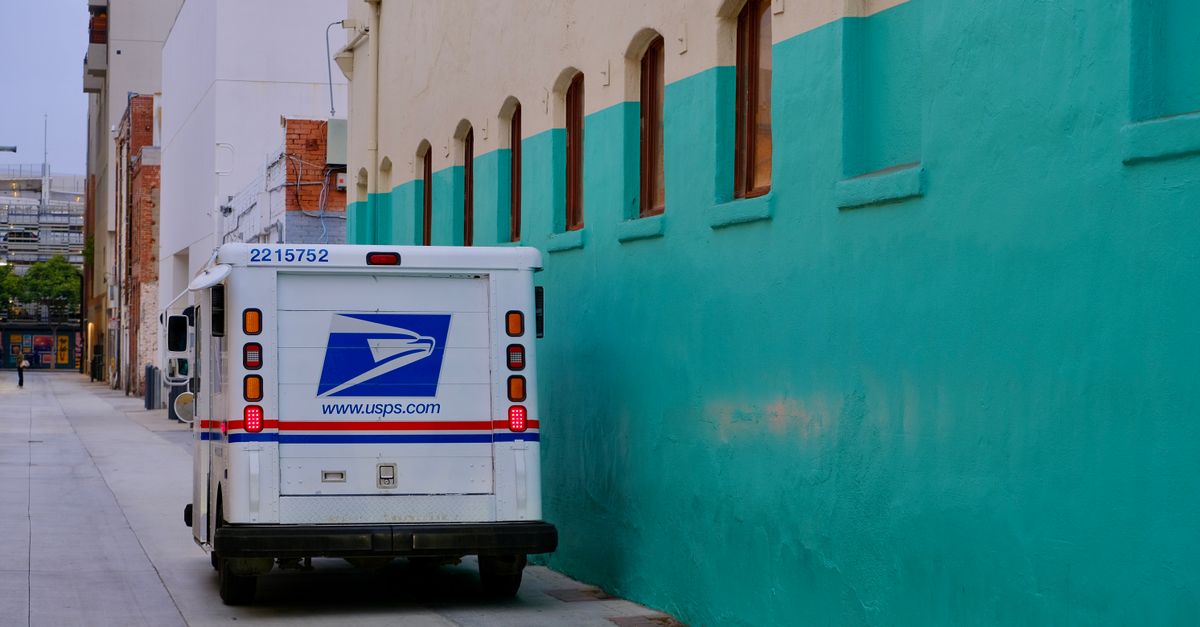
If you’ve tried to drop a bottle of perfume in a USPS box or print a label at home, you’ve probably run into a wall: USPS treats perfume as hazardous material, and its rules are stricter — and more confusing — than most commercial couriers. Here’s what’s actually allowed, what isn’t, and why brands shipping any real volume tend to move away from USPS altogether.
The short answer
Perfume, cologne, and most alcohol-based fragrances are classified as a flammable liquid (UN1266, Class 3) because of their alcohol content. Under USPS’s mailability rules (Publication 52, the section covering hazardous, restrictive, and perishable mail), that classification puts perfume in a narrow lane:
- Domestic mail: generally mailable, but only via surface (ground) transportation, in limited quantities per package, with the correct hazmat marking on the outside of the parcel.
- Air transportation (including Priority Mail Express): not permitted for perfume domestically — even within the US, it has to travel by truck and rail, not by plane.
- International mail: in practice, USPS does not accept perfume for most international destinations. Flammable liquids are excluded from the vast majority of its international mail classes, which is why “can I mail perfume abroad with USPS” so often ends in a rejected package at the counter.
That’s a very different set of rules from carrying a bottle in your hand luggage, and a very different set of rules from what commercial couriers offer once you’re shipping as a business rather than mailing a single personal item.
Why USPS treats perfume differently from a normal parcel
It comes down to the alcohol. Most fine fragrance is 60–95% ethanol by volume, which is what makes it flammable and gives it a UN number and packing group under dangerous goods regulations, the same framework covered in our IATA dangerous goods compliance checklist. USPS’s domestic hazmat rules exist because a leaking or crushed flammable-liquid parcel is a genuine risk in a truck full of other mail, not because of any quirk specific to perfume brands. The restriction on air transportation follows the same logic that keeps most flammable liquids off passenger aircraft in bulk.
The practical effect is that USPS’s own network simply isn’t built to move this product category at scale, particularly across borders. That’s not a criticism of USPS — postal services worldwide are built around ordinary mail, not dangerous goods — but it does mean sellers need to look elsewhere once they’re shipping perfume regularly rather than occasionally.
What this means if you’re mailing a bottle as an individual
If you’re sending a single bottle domestically within the US — a gift, a decant, something a friend left behind — USPS’s ground service can usually work, provided you:
- Use the correct hazmat/perfume mail classification when creating the label, rather than mailing it as an undeclared item
- Package it so it can’t leak: a sealed cap, cushioning, and a leak-proof bag around the bottle itself
- Keep quantities within the limits USPS sets for mailable perfume, checking the current Publication 52 figures rather than assuming last year’s limits still apply
- Accept that it will move by ground, so delivery will take longer than a standard parcel
We cover the general version of this — for any carrier, not just USPS — in our guide to mailing perfume as an individual and in how to package perfume for shipping, which walks through cushioning, cap security, and absorbent materials in more detail.
What this means if you’re a seller
This is where USPS’s limitations start to bite. If you sell fragrance on eBay, Etsy, your own store, or as a decant/sample business, a few things make USPS a poor long-term fit once volume grows:
- No international reach for the product itself. If your customers are outside the US, USPS generally can’t move perfume to them at all — you need a carrier that actually accepts Class 3 flammable liquids internationally.
- Ground-only means slower delivery. Customers expecting 2–3 day shipping will be disappointed by a ground-only hazmat service.
- Per-package hazmat limits cap your batching. You can’t consolidate multiple bottles into one package past a certain point without changing the shipment’s classification — the same kit-level classification issue we cover in our guide to shipping perfume samples.
- Manual hazmat labeling doesn’t scale. Declaring each parcel correctly by hand is manageable at ten orders a month; it becomes a liability at a hundred.
This is exactly the gap that commercial dangerous-goods-trained carriers and 3PLs are built to close. Couriers like DHL, FedEx, UPS, and Royal Mail all accept perfume internationally under IATA and ADR/IMDG rules with the right packaging and documentation — we compare their specific acceptance policies in which couriers ship perfume internationally. Unlike USPS, these networks are set up to move flammable liquids by air as well as ground, which is what makes reasonable international delivery times possible at all.
If you’re buying from a UK-based brand, USPS isn’t part of the journey anyway
A related question we hear from US buyers is whether a perfume order from a UK seller will show up via USPS. It won’t, at least not for the international leg. A UK-based fragrance brand or fulfilment operation ships internationally through commercial dangerous-goods-trained couriers rather than through either country’s postal service, precisely because those couriers are equipped to classify, document, and route Class 3 flammable liquid across borders. USPS typically only enters the picture, if at all, for the final domestic handoff once a parcel has already cleared into the US through a courier’s own network — the shipping and compliance work happens well before that point.
That’s part of why “worldwide, shipped from the UK” is a workable model for fragrance and home fragrance brands: the constraint isn’t where the warehouse sits, it’s whether the outbound carrier is trained and equipped for dangerous goods. A UK-based, DG-trained fulfilment partner shipping via compliant couriers can reach US, EU, or other international customers reliably, without ever touching USPS’s restricted international mail classes.
The bigger picture for brands
If you’re building a fragrance brand and currently relying on USPS (or any single postal service) to ship orders yourself, the USPS limits above are usually the first wall you hit as volume grows — right around the point where hand-labeling each hazmat parcel stops being realistic. That’s typically when brands look at a 3PL that’s already DG-trained, holds the right storage and packaging for flammable liquids, and has courier relationships that cover both domestic and international delivery without the postal restrictions. Our guide to choosing a 3PL for your fragrance brand covers what to look for if you’re at that stage.
FAQ
Can you ship perfume through USPS at all?
Yes, domestically, via ground transportation, in limited quantities, with the correct hazmat classification on the label. It cannot go by air within the US, including Priority Mail Express.
Can USPS ship perfume internationally?
In practice, no, for the great majority of destinations — flammable liquids are excluded from most of USPS’s international mail classes. Commercial couriers with dangerous goods capability are the practical option for international fragrance shipments.
Why can’t perfume go by air with USPS?
Because it’s classified as a Class 3 flammable liquid (UN1266) due to its alcohol content, and USPS restricts that classification to surface transportation domestically rather than air.
Is this different from carrying perfume in checked or carry-on luggage?
Yes — airline passenger liquid limits (like the well-known carry-on restrictions) are a separate set of rules from mailing or shipping perfume as cargo, and the two shouldn’t be confused.
What should a growing fragrance brand use instead of USPS?
A commercial courier or 3PL with dangerous goods training and the right compliant packaging, which can handle both the classification paperwork and international delivery that USPS’s mail classes aren’t built for. See our fulfilment services for how this works in practice, or get in touch to talk through your specific shipping volumes and destinations.